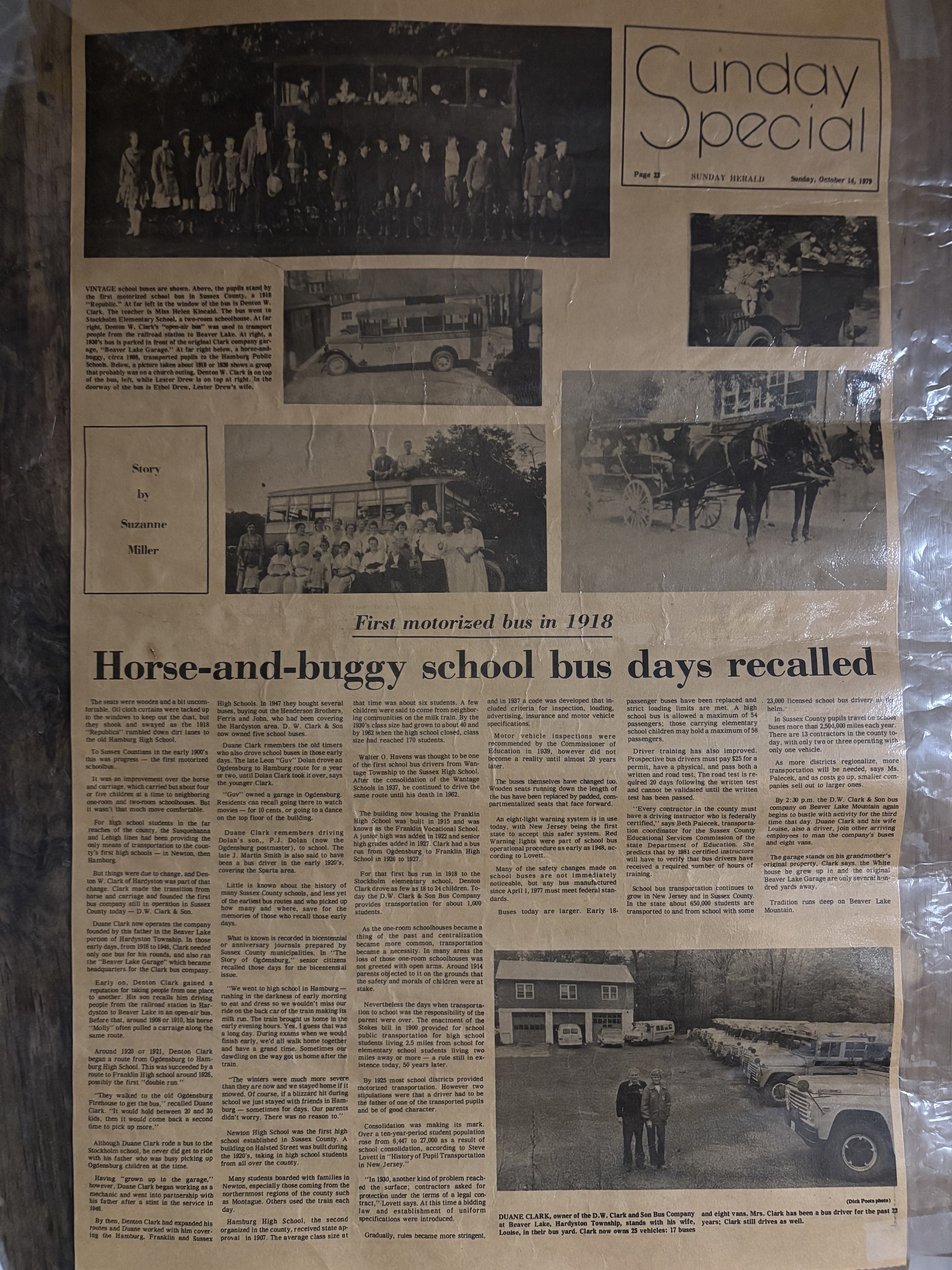
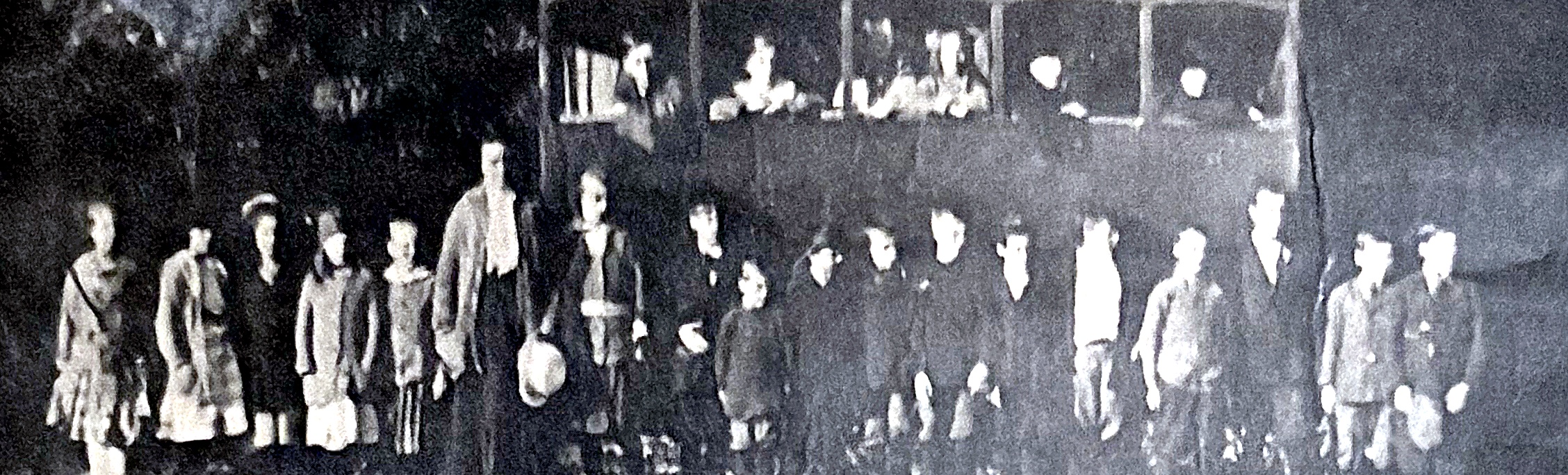
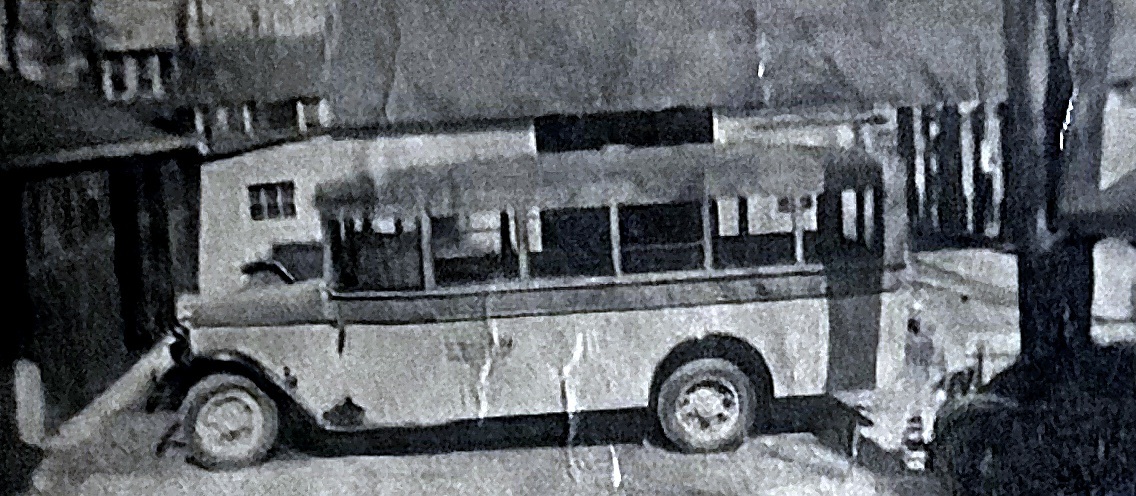
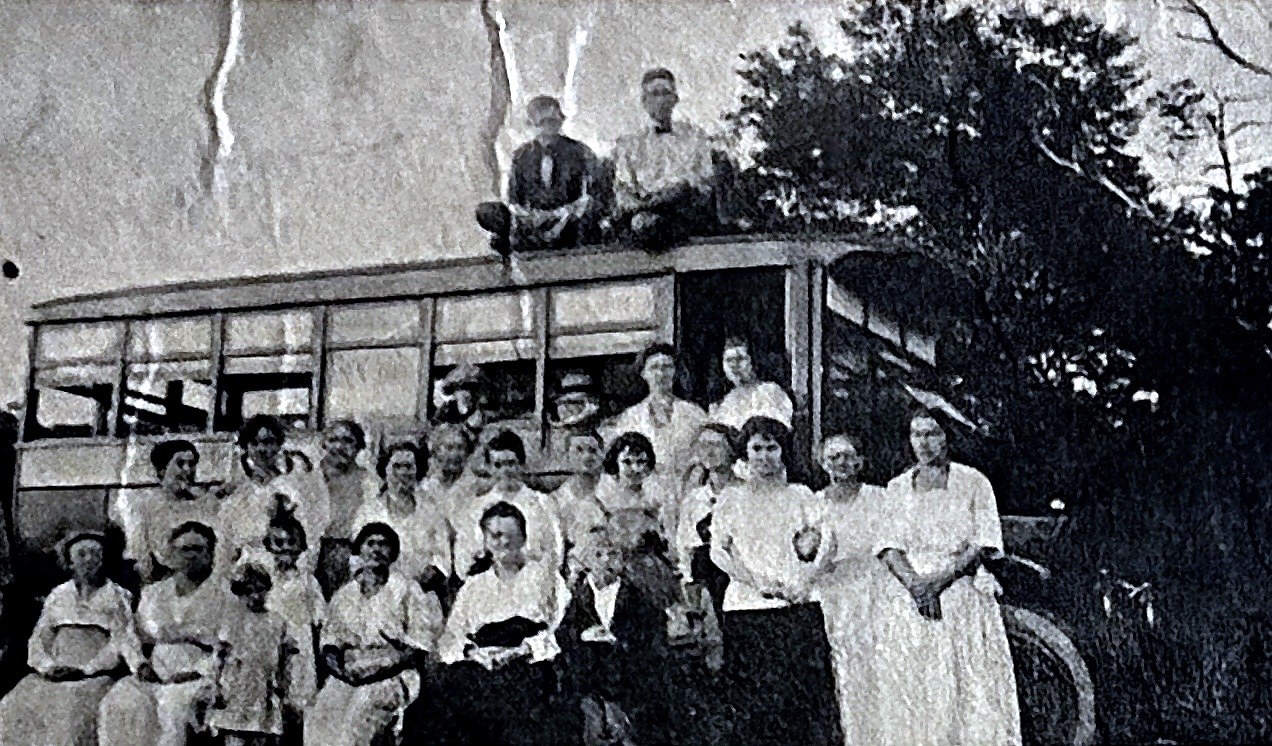
The seats were wooden and a bit uncomfortable. Oil cloth curtains were tacked up to the windows to keep out the dust, but they shook and swayed as the 1918 “Republic” rumbled down dirt lanes to the old Hamburg High School.
To Sussex Countians in the early 1900’s this was progress — the first motorized schoolbus.
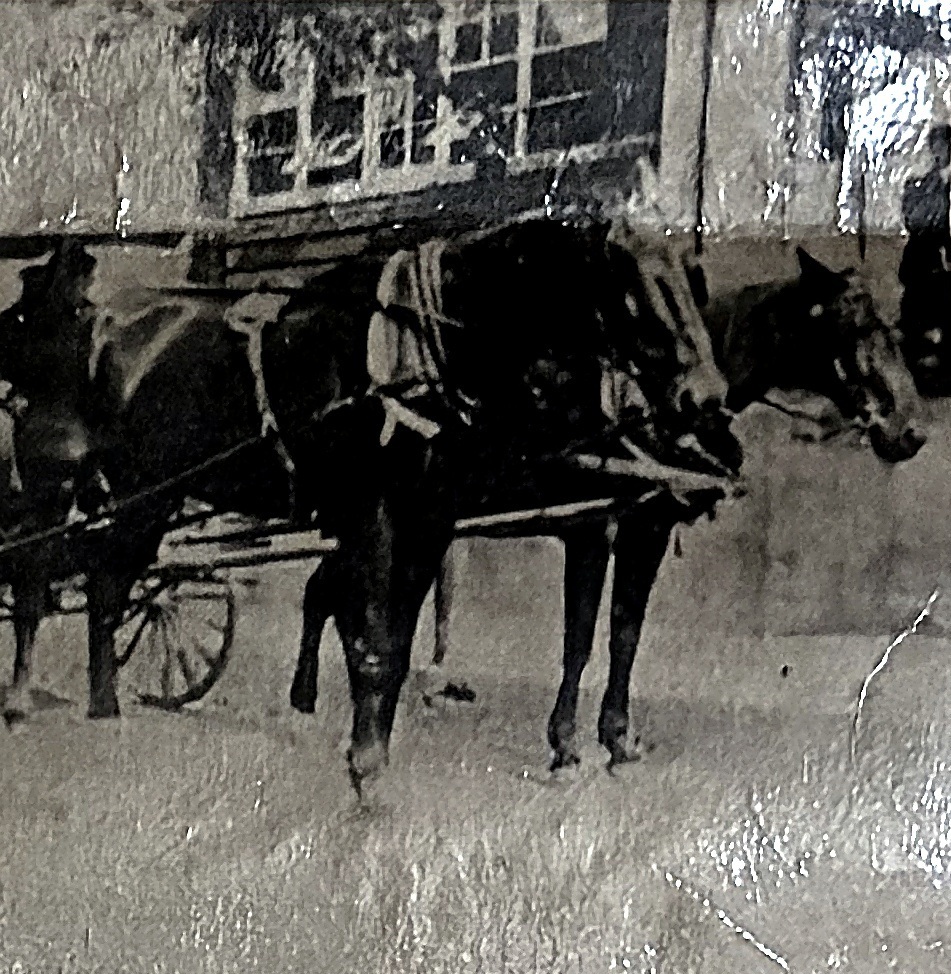
It was an improvement over the horse and carriage, which carried but about four or five children at a time to neighboring one-room and two-room schoolhouses. But it wasn’t that much more comfortable.
For high school students in the far reaches of the county, the Susquehanna and Lehigh lines had been providing the only means of transportation to the county’s first high schools — in Newton, then Hamburg.
But things were due to change, and Denton W. Clark of Hardyston was part of that change. Clark made the transition from horse and carriage and founded the first bus company still in operation in Sussex County today — D.W. Clark & Son.
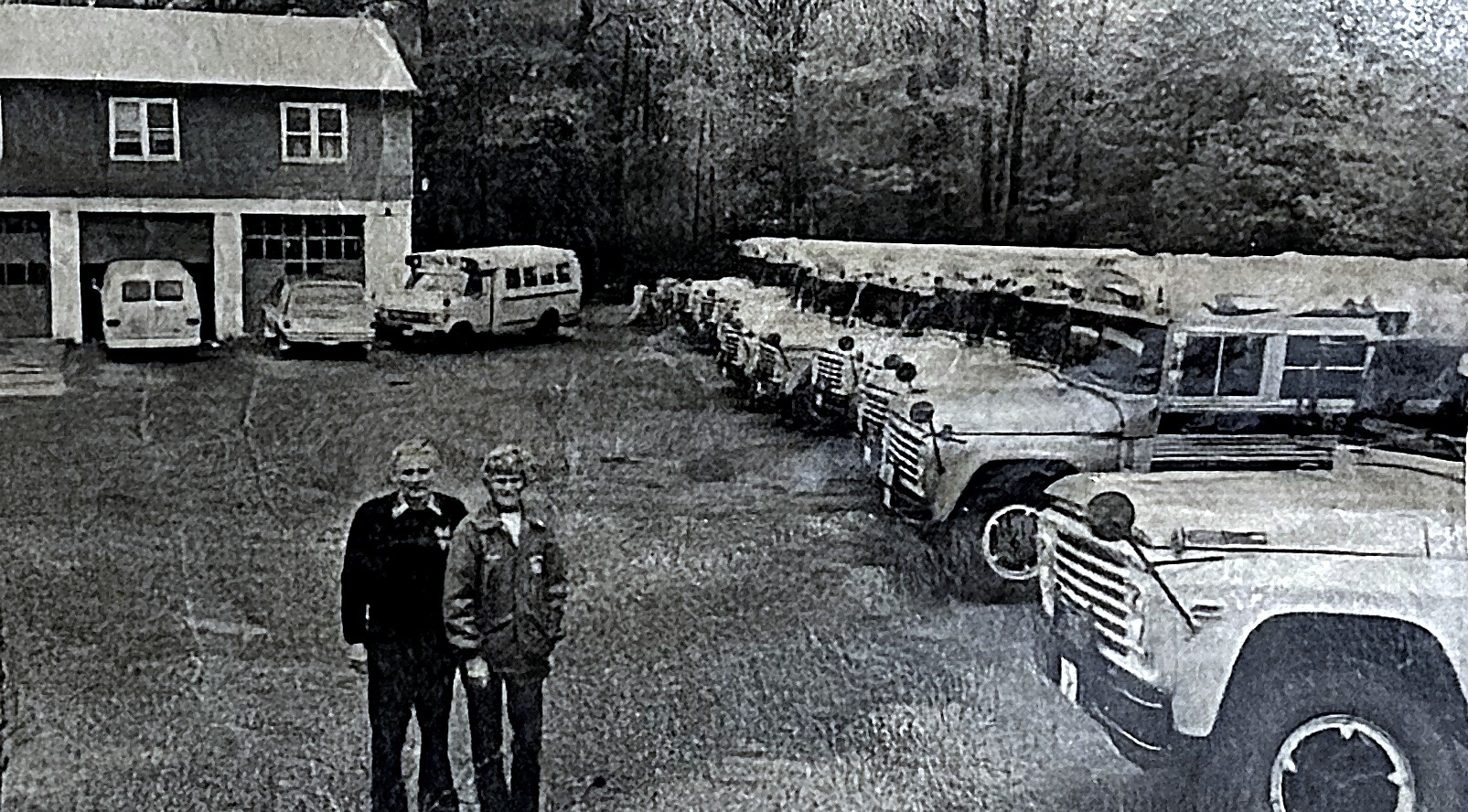
Duane Clark now operates the company founded by his father in the Beaver Lake portion of Hardyston Township. In those early days, from 1918 to 1946, Clark needed only one bus for his rounds, and also ran the “Beaver Lake Garage” which became headquarters for the Clark bus company.
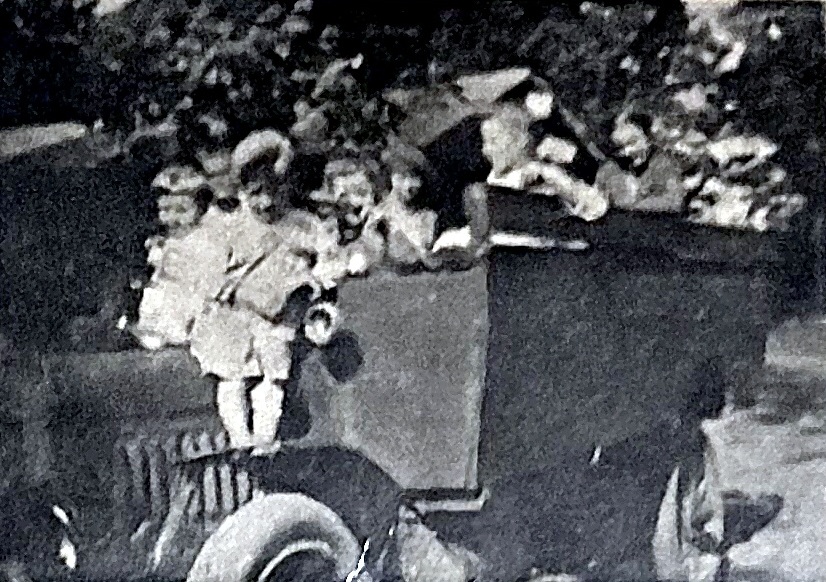
Early on, Denton Clark gained a reputation for taking people from one place to another. His son recalls him driving people from the railroad station in Hardyston to Beaver Lake in an open-air bus. Before that, around 1908 or 1910, his horse “Molly” often pulled a carriage along the same route.
Around 1920 or 1921, Denton Clark began a route from Ogdensburg to Hamburg High School. This was succeeded by a route to Franklin High School around 1926, possibly the first “double run.”
“They walked to the old Ogdensburg Firehouse to get the bus,” recalled Duane Clark. “It would hold between 20 and 30 kids, then it would come back a second time to pick up more.”
Although Duane Clark rode a bus to the Stockholm school, he never did get to ride with his father who was busy picking up Ogdensburg children at the time.
Having “grown up in the garage,” however, Duane Clark began working as a mechanic and went into partnership with his father after a stint in the service in 1946.
By then, Denton Clark had expanded his routes and Duane worked with him covering the Hamburg, Franklin and Sussex High Schools. In 1947 they bought several buses, buying out the Henderson Brothers, Ferris and John, who had been covering the Hardyston area. D. W. Clark & Son now owned five school buses.
Duane Clark remembers the old timers who also drove school buses in those early days. The late Leon “Guv” Dolan drove an Ogdensburg to Hamburg route for a year or two, until Dolan Clark took it over, says the younger Clark.
“Guv” owned a garage in Ogdensburg. Residents can recall going there to watch movies — for 10 cents, or going to a dance on the top floor of the building.
Duane Clark remembers driving Dolan’s son, P.J. Dolan (now the Ogdensburg postmaster), to school. The late J. Martin Smith is also said to have been a bus driver in the early 1920’s, covering the Sparta area.
Little is known about the history of many Sussex County schools, and less yet of the earliest bus routes and who picked up how many and where, save for the memories of those who recall those early days.
What is known is recorded in bicentennial or anniversary journals prepared by Sussex County municipalities. In “The Story of Ogdensburg,” senior citizens recalled those days for the bicentennial issue.
“We went to high school in Hamburg — rushing in the darkness of early morning to eat and dress so we wouldn’t miss our ride on the back car of the train making its milk run. The train brought us home in the early evening hours. Yes, I guess that was a long day. During exams when we would finish early, we’d all walk home together and have a grand time. Sometimes our dawdling on the way got us home after the train.
“The winters were much more severe than they are now and we stayed home if it snowed. Of course, if a blizzard hit during school we just stayed with friends in Hamburg — sometimes for days. Our parents didn’t worry. There was no reason to.”
Newton High School was the first high school established in Sussex County. A building on Halsted Street was built during the 1920’s, taking in high school students from all over the county.
Many students boarded with families in Newton, especially those coming from the northernmost regions of the county such as Montague. Others used the train each day.
Hamburg High School, the second organized in the county, received state approval in 1907. The average class size at that time was about six students. A few children were said to come from neighboring communities on the milk train. By the 1930’s class size had grown to about 40 and by 1962 when the high school closed, class size had reached 170 students.
Walter O. Havens was thought to be one of the first school bus drivers from Wantage Township to the Sussex High School. After the consolidation of the Wantage Schools in 1937, he continued to drive the same route until his death in 1962.
The building now housing the Franklin High School was built in 1915 and was known as the Franklin Vocational School. A junior high was added in 1922 and senior high grades added in 1927. Clark had a bus run from Ogdensburg to Franklin High School in 1926 to 1927.
For that first bus run in 1918 to the Stockholm elementary school, Denton Clark drove as few as 18 to 24 children. Today the D.W. Clark & Son Bus Company provides transportation for about 1,000 students.
As the one-room schoolhouses became a thing of the past and centralization became more common, transportation became a necessity. In many areas the loss of those one-room schoolhouses was not greeted with open arms. Around 1914 parents objected to it on the grounds that the safety and morals of children were at stake.
Nevertheless the days when transportation to school was the responsibility of the parent were over. The enactment of the Stokes bill in 1900 provided for school public transportation for high school students living 2.5 miles from school for elementary school students living two miles away or more — a rule still in existence today, 50 years later.
By 1925 most school districts provided motorized transportation. However two stipulations were that a driver had to be the father of one of the transported pupils and be of good character.
Consolidation was making its mark. Over a ten-year-period student population rose from 6,447 to 27,000 as a result of school consolidation, according to Steve Lovett in “History of Pupil Transportation in New Jersey.”
“In 1930, another kind of problem reached the surface; contractors asked for protection under the terms of a legal contract,” Lovett says. At this time a bidding law and establishment of uniform specifications were introduced.
Gradually, rules became more stringent, and in 1937 a code was developed that included criteria for inspection, loading, advertising, insurance and motor vehicle specifications.
Motor vehicle inspections were recommended by the Commissioner of Education in 1939, however did not become a reality until almost 20 years later.
The buses themselves have changed too. Wooden seats running down the length of the bus have been replaced by padded, compartmentalized seats that face forward.
An eight-light warning system is in use today, with New Jersey being the first state to accept this safer system. Red warning lights were part of school bus operational procedure as early as 1948, according to Lovett.
Many of the safety changes made on school buses are not immediately noticeable, but any bus manufactured since April 1, 1977 must meet federal standards.
Buses today are larger. Early 18-passenger buses have been replaced and strict loading limits are met. A high school bus is allowed a maximum of 54 passengers; those carrying elementary school children may hold a maximum of 58 passengers.
Driver training has also improved. Prospective bus drivers must pay $25 for a permit, have a physical, and pass both a written and road test. The road test is required 20 days following the written test and cannot be validated until the written test has been passed.
“Every contractor in the county must have a driving instructor who is federally certified,” says Beth Palecek, transportation coordinator for the Sussex County Educational Services Commission of the state Department of Education. She predicts that by 1981 certified instructors will have to verify that bus drivers have received a required number of hours of training.
School bus transportation continues to grow in New Jersey and in Sussex County. In the state about 650,000 students are transported to and from school with some 23,000 licensed school bus drivers at the helm.
In Sussex County pupils travel on school buses more than 2,500,000 miles each year. There are 13 contractors in the county today, with only two or three operating with only one vehicle.
As more districts regionalize, more transportation will be needed, says Ms. Palecek, and as costs go up, smaller companies sell out to larger ones.
By 2:30 p.m. the D.W. Clark & Son bus company on Beaver Lake Mountain again begins to bustle with activity for the third time that day. Duane Clark and his wife Louise, also a driver, join other arriving employees to man the company’s buses and eight vans.
The garage stands on his grandmother’s original property, Clark says. The white house he grew up in and the original Beaver Lake Garage are only several hundred yards away.
Tradition runs deep on Beaver Lake Mountain.